Constant hunger isn’t simply about willpower. In many cases, it’s your body’s way of telling you that something is missing.
Here are five of the most common reasons you might always feel hungry—and what you can do about each one.
If you regularly skip meals or follow very low-calorie diets, your body responds by increasing hunger hormones.Common signs
What to do
If you’re walking 10,000 steps a day, lifting weights or exercising regularly, your body simply needs more fuel.
Don’t be afraid to eat after training.
Aim for:
✔ Protein
✔ Carbohydrates
within two hours of finishing your workout.
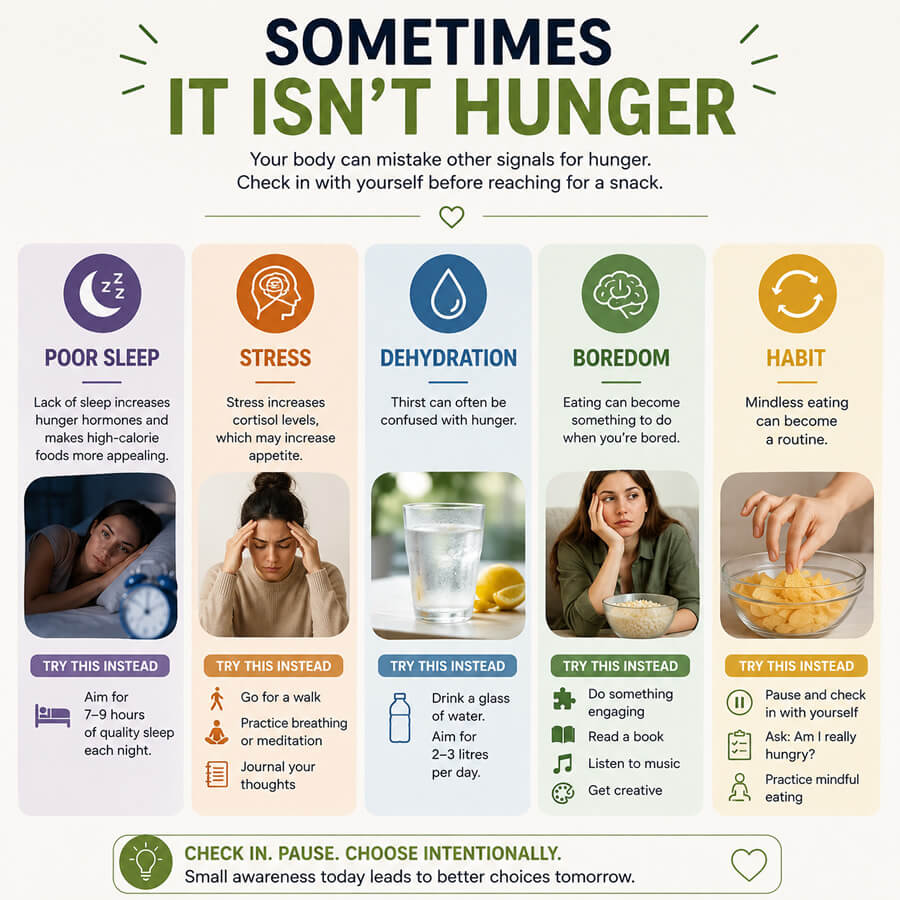
✔ Poor sleep
Lack of sleep increases hunger hormones and makes high-calorie foods more appealing.
Aim for 7-9 hours per night.
✔ Stress
Stress increases cortisol levels, which may increase appetite.
Stress management techniques:
✔ Dehydration
Sometimes thirst feels like hunger.
Aim for 2-3 litres of water per day.
✔ Boredom
Eating to fill time
✔ Habit
Just something you do
NOTE TO SELF:
Before You Reach for Another Snack, Ask Yourself…
☐ Have I eaten enough today?
☐ Did I include protein?
☐ Have I eaten fruit or vegetables?
☐ Have I had enough water?
☐ Am I actually tired or stressed?
☐ Did I train today?
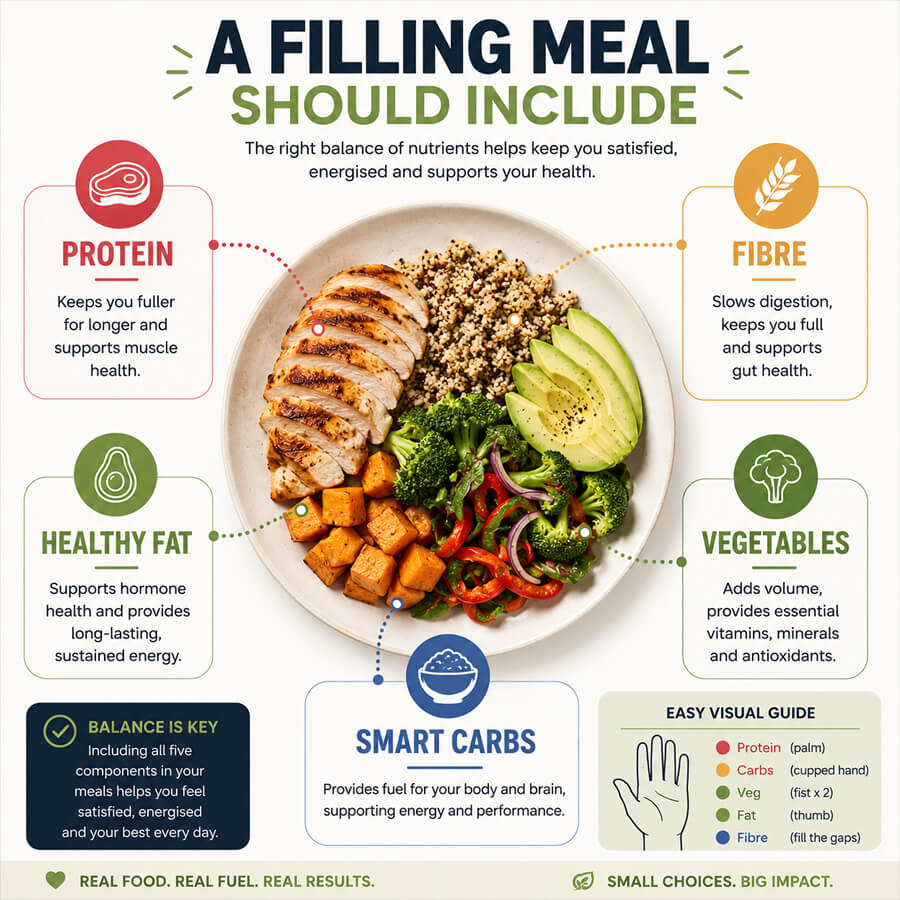
Meals low in protein, fibre or healthy fats digest quickly, meaning you feel hungry sooner.
Yes. Mild dehydration is often mistaken for hunger. Try drinking a glass of water before reaching for a snack.
Yes. Protein is one of the most filling nutrients and can help reduce cravings throughout the day.
If you’ve trained, especially strength training or longer cardio sessions, eating protein and carbohydrates afterwards supports recovery and helps control appetite.
Some hunger is expected, but constant hunger usually suggests your calorie deficit is too aggressive or your meals aren’t balanced.
Copyright 2026 Body Appeal Fitness All rights reserved